Condition
Thick or Deformed Nails
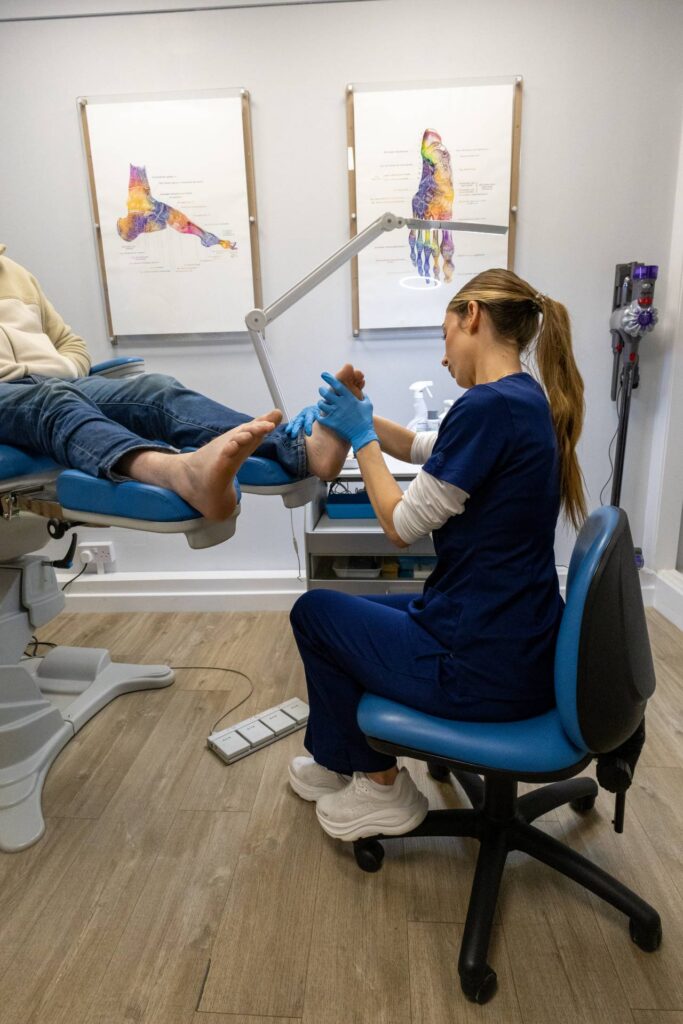
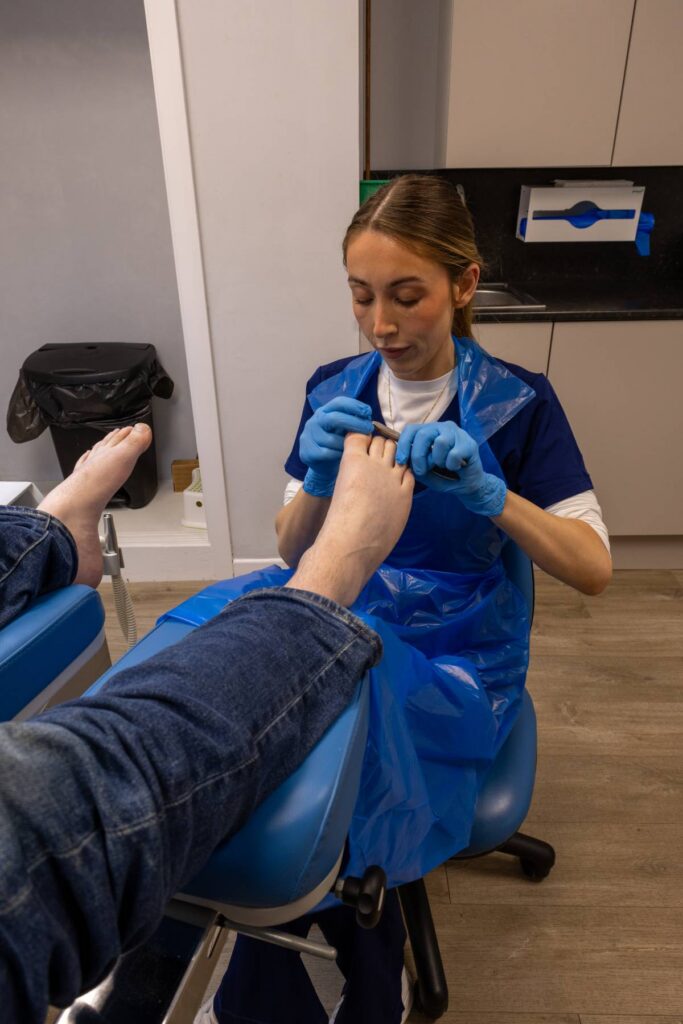
Nails can become thick or deformed due to a variety of conditions. Dystrophic nails are often caused by fungal infections, trauma or skin conditions such as psoriasis. They can appear thickened discoloured brittle or deformed. Treatment depends on the cause and may include antifungal medication improved nail care or, rarely, surgery.
Class 4 laser therapy offers a non-invasive and pain-free solution for treating tinea pedis (athlete’s foot) and related fungal infections like onychomycosis (fungal nail infection). It achieves this by utilising high-intensity infrared light that penetrates deep into the skin and nail tissue, effectively destroying the fungus while promoting healing and tissue regeneration.
How Class 4 Laser Treats Tinea Pedis
- The laser delivers intense heat and light to destroy the fungus responsible for athlete’s foot without damaging surrounding healthy skin. This destroys the fungal cells effectively. Furthermore, the treatment stimulates blood circulation and improves oxygenation, accelerating the skin’s repair process.
- Specialised MLS Class 4 lasers can be used to treat stubborn skin infections by improving blood flow and reducing associated pain. Some Class 4 lasers, like the K-Laser Cube 3, use multiple wavelengths (650nm, 810nm, 915nm) to maximise efficiency in treating chronic skin conditions.
- The National Institutes of Health (.gov) offers information on the benefits of Class 4 laser for skin infections. It’s safe and painless, unlike some thermal treatments. Few side effects are reported making it a safer alternative to oral antifungals which can have liver-related risks. Patients can resume daily activities immediately after the session and treatments are quick, usually lasting 15-30 minutes.
Treatment Protocol
- A course of treatments is usually needed, often recommended at 4-6 sessions depending on the severity. Preventative care is often combined with antiseptic spray or anti-fungal cream to prevent recurrence. It’s also commonly used alongside mechanical debridement of the skin to maximise the light treatment’s effectiveness.
Condition
Thickened or Deformed Nails
What are Thickened or Deformed Nails?
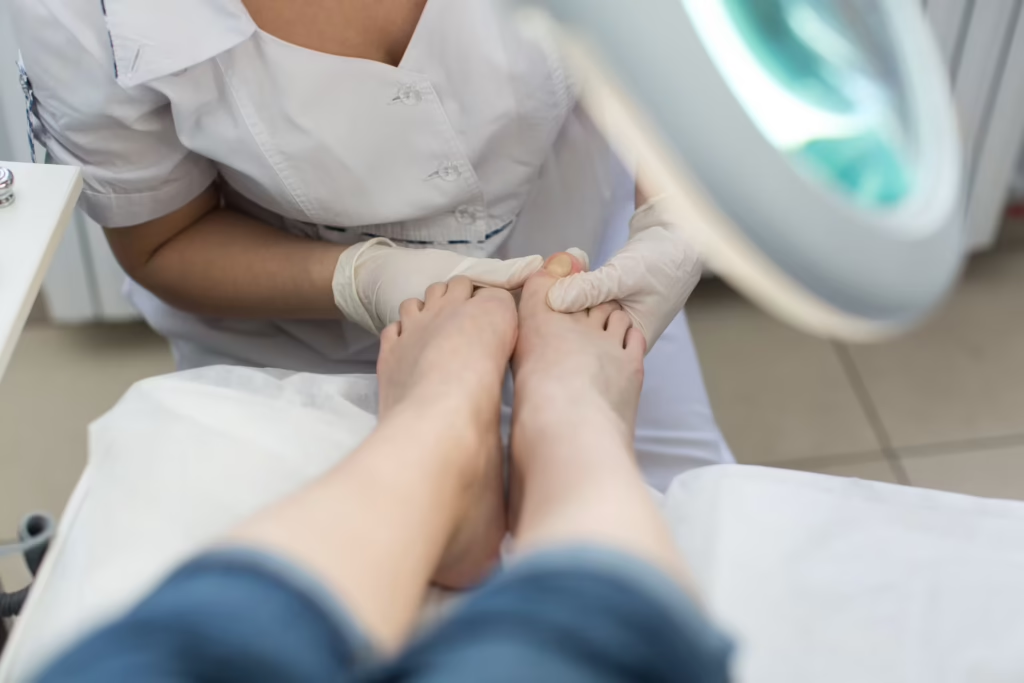
Thickened or deformed nails occur when the toenails become abnormally thick, brittle, discoloured, or misshapen. This condition most commonly affects toenails and may make trimming difficult, cause discomfort in footwear, and sometimes lead to pain or infection.
It is frequently seen in older adults, people with diabetes, or individuals with repeated nail trauma.
Causes
The most common causes of thickened or deformed nails include:
- Repeated trauma
- Age-related changes
- Skin conditions
- Circulatory or systemic conditions
Symptoms
Symptoms for thickened or deformed nails include:
- Thickened nail plate
- Discolouration (yellow, brown, white)
- Brittle or crumbly nail edges
- Curved, twisted, or distorted nail shape
- Pain or pressure in shoes
- Difficulty cutting nails
- Build-up of debris under the nail
Treatments
Treatments for corns and calluses include:
- Regular foot hygiene
- Proper footwear to reduce pressure
- Oral antifungal therapy (for confirmed fungal infection)
- Partial or total nail removal in severe cases