
FUNGAL NAILS
Discoloured, thickened or crumbly toenails you'd rather hide?
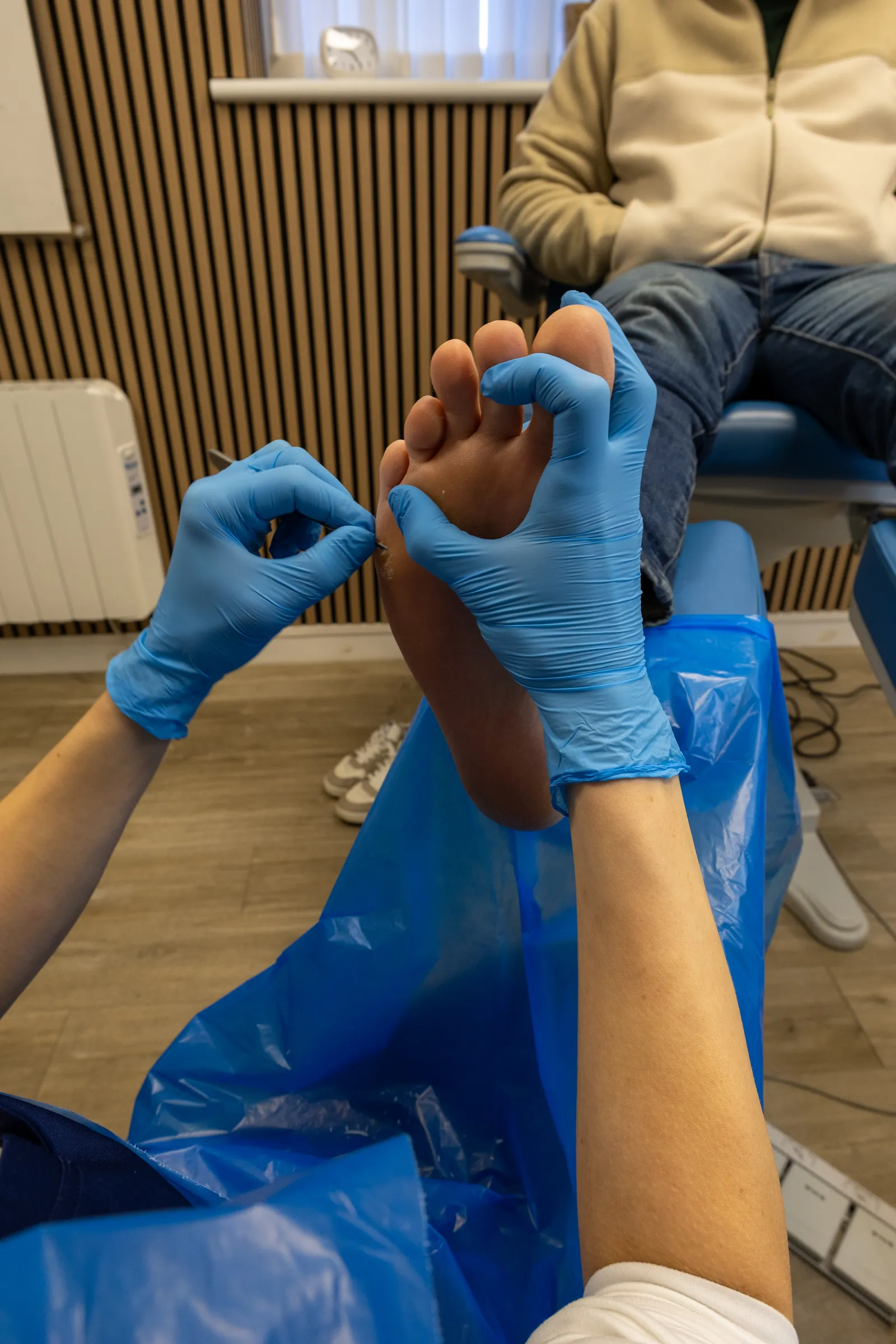
Fungal nail infections (onychomycosis) are very common, especially when feet spend long hours in warm, damp footwear. Our podiatrists assess the nail, reduce thickness and agree a clear treatment plan with you.
COMMON SYMPTOMS
Does any of this sound familiar?
Fungal nail infections develop slowly and often start at the edge of one nail. Common signs include:
- Yellow, brown, or white discolouration of one or more toenails
- Nails becoming unusually thick, difficult to cut, or misshapen
- Brittle, crumbly, or ragged nail edges
- Debris accumulating beneath the nail plate
- A dull ache or pressure under the nail when wearing shoes
- Spread of discolouration across multiple toenails over time
Fungal nail infections rarely clear on their own without active treatment.
Professional nail care and a clear plan give treatment the best chance of working.
We're here for you
Tired of Living With Pain? We Can Help
STEP 1 OF 2
Request a callback
Fill in your details and one of our team members will be in touch to help.
- Not sure who to ask?
- Not sure what to do next?
- Not sure who can help?
Please fill out the form and chat with one of our team members about your right next step.
FREE INFORMATION PACK
Free Foot Pain Information Pack
Practical, plain-English advice from our podiatrists you can start using at home today. Download your free guide in seconds.
POSSIBLE CAUSES
What causes fungal nail infections?
Fungi thrive in warm, damp environments. Several factors increase the likelihood of infection:
Warm, damp footwear
Humidity and warmth create ideal conditions for dermatophyte fungi to proliferate.
Untreated athlete's foot
Fungal skin infections between the toes can easily spread into the adjacent nail beds.
Communal wet areas
Walking barefoot around swimming pools, gym locker rooms, or hotel showers.
Nail micro-trauma
Repeated stubbing or tight footwear creates microscopic openings for fungi to enter.
WHEN TO SEEK ASSESSMENT
When should you consider getting fungal nails checked?
Consider arranging an assessment if:
- Over-the-counter lacquers have made no noticeable difference
- Nails are too thick or tough to trim with standard clippers
- The infection is spreading to adjacent toenails
- You have diabetes or compromised circulation
- You want a professional clinical debridement and targeted plan
YOUR APPOINTMENT
What happens when you come to see us?
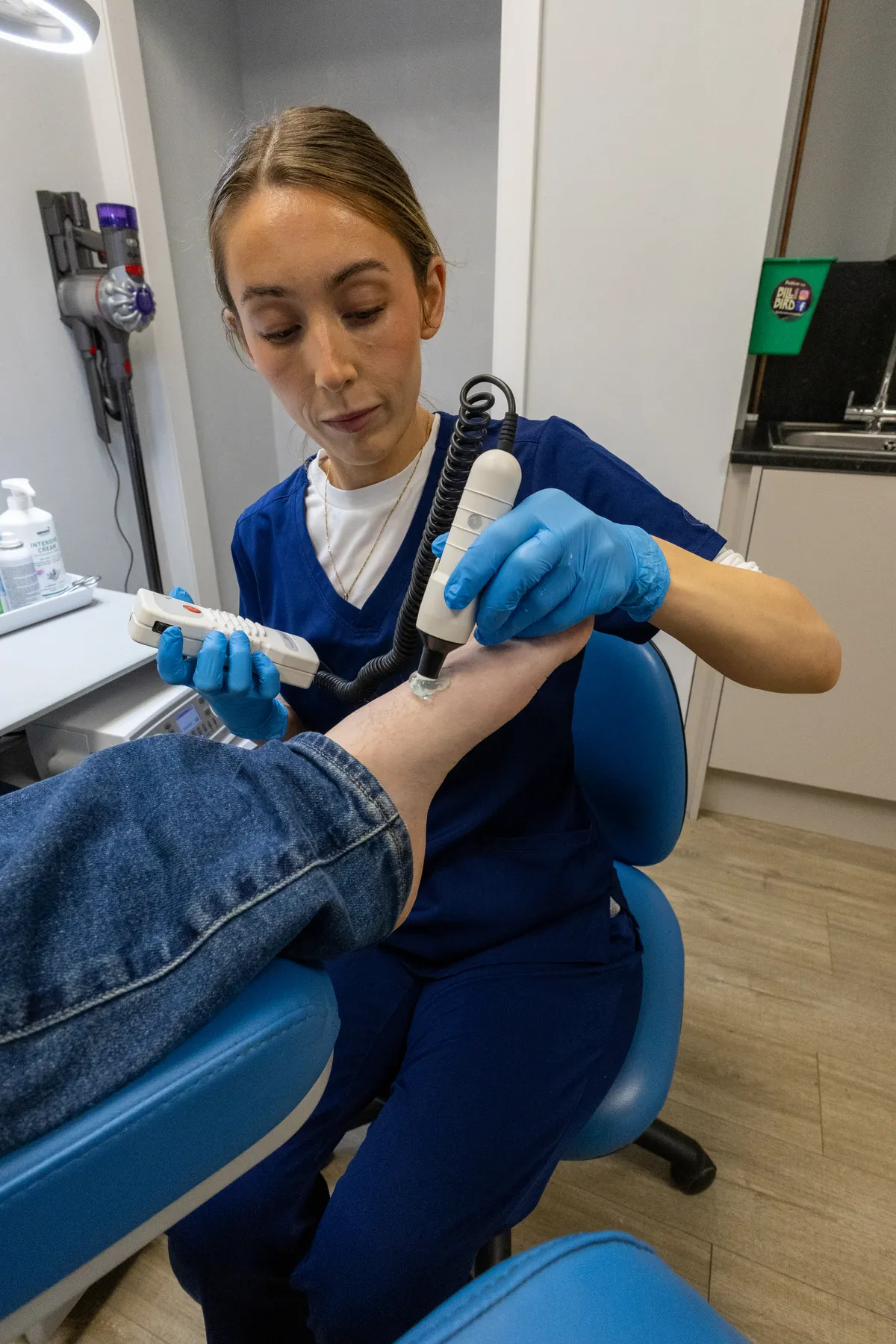
We assess the nail health, reduce thickness clinically, and advise on effective solutions
We assess
Your podiatrist checks the depth, pattern, and extent of the nail discolouration.
We thin the nail
Painless burring reduces thickness so treatment can work effectively.
We check the skin
We examine the surrounding skin for concurrent athlete's foot.
We treat & plan
Treatment matched to your nails, plus a clear plan and footwear hygiene advice.
TREATMENT OPTIONS
Treatment depends on what we find
Fungal nail management requires consistency. Possible approaches include:
Not every treatment is appropriate for every patient. Your podiatrist will discuss suitable options after assessment.
- Clinical nail debridement & thinning
- Targeted topical antifungal regimens
- Concurrent athlete's foot skin treatment
- Footwear hygiene & shoe sanitisation advice
- Routine podiatry maintenance visits
Patient Reviews
What our patients say about their care
Real feedback from individuals who have trusted our clinical team with their mobility and foot health.
Reviews widget
Connect the native reviews widget — the embed mounts here automatically.
FAQ
Fungal nail FAQs
READY TO GET STARTED?
Ready to get your fungal nails assessed?
Book online at a time that suits you, or request a callback if you're unsure which appointment is right for you.